
Here is what common colors mean:
Red
Stop
Danger
Prohibition
Immediate action required
Yellow
Warning
Caution
Potential hazard ahead
Green
Permitted actions
Directional guidance
Movement allowed
Blue (in official signage systems)
Blue is typically used for:
Information signs
Parking instructions
Services (like hospitals or rest areas) in some countries
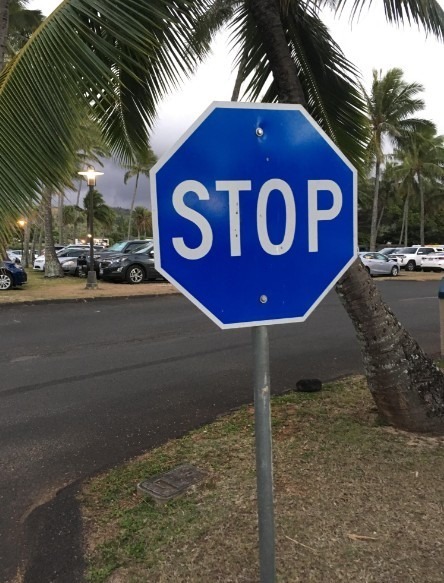
But importantly, blue is never used for stop commands in standard traffic systems.
That is why a “blue stop sign” immediately stands out as unusual.
Could a Blue Stop Sign Mean Something Hidden?
A common online myth suggests that a blue stop sign has a “secret meaning” or alternative instruction. In reality, there is no standardized traffic system where a blue stop sign means something special like “go,” “yield,” or “emergency stop.”
Traffic laws are strictly regulated by government authorities, and any official sign must follow established design rules. A change in color alone would completely alter its meaning and would not be legally recognized.
So if someone tells you a blue stop sign has a hidden official meaning, that is almost certainly misinformation.
Why You Might See One in Your Neighborhood
If you saw a blue stop sign near your home or in your neighborhood, here are the most likely explanations:
1. Private driveway control
A homeowner may have placed it to:
Prevent speeding vehicles
Indicate where guests should pause
Improve safety near an entrance
2. Parking lot management
Businesses sometimes use non-standard signage internally to:
Organize vehicle flow
Reduce confusion
Mark stopping points
3. Decorative installation
Some people install signs as:
Humor
Artistic expression
Quirky property decoration
4. Old or repurposed sign
In rare cases, materials from old signage may be reused or altered.
Is a Blue Stop Sign legally enforceable?
In almost all cases: no.
Here is what common colors mean:
Red
Stop
Danger
Prohibition
Immediate action required
Yellow
Warning
Caution
Potential hazard ahead
Green
Permitted actions
Directional guidance
Movement allowed
Blue (in official signage systems)
Blue is typically used for:
Information signs
Parking instructions
Services (like hospitals or rest areas) in some countries
But importantly, blue is never used for stop commands in standard traffic systems.
That is why a “blue stop sign” immediately stands out as unusual.
Could a Blue Stop Sign Mean Something Hidden?
A common online myth suggests that a blue stop sign has a “secret meaning” or alternative instruction. In reality, there is no standardized traffic system where a blue stop sign means something special like “go,” “yield,” or “emergency stop.”
Traffic laws are strictly regulated by government authorities, and any official sign must follow established design rules. A change in color alone would completely alter its meaning and would not be legally recognized.
So if someone tells you a blue stop sign has a hidden official meaning, that is almost certainly misinformation.
Why You Might See One in Your Neighborhood
If you saw a blue stop sign near your home or in your neighborhood, here are the most likely explanations:
1. Private driveway control
A homeowner may have placed it to:
Prevent speeding vehicles
Indicate where guests should pause
Improve safety near an entrance
2. Parking lot management
Businesses sometimes use non-standard signage internally to:
Organize vehicle flow
Reduce confusion
Mark stopping points
3. Decorative installation
Some people install signs as:
Humor
Artistic expression
Quirky property decoration
4. Old or repurposed sign
In rare cases, materials from old signage may be reused or altered.
Is a Blue Stop Sign legally enforceable?
In almost all cases: no.
see continuation on next page
To see the full cooking instructions, go to the next page or click the Open button (>) and don’t forget to SHARE it with your friends on Facebook.
ADVERTISEMENT

