
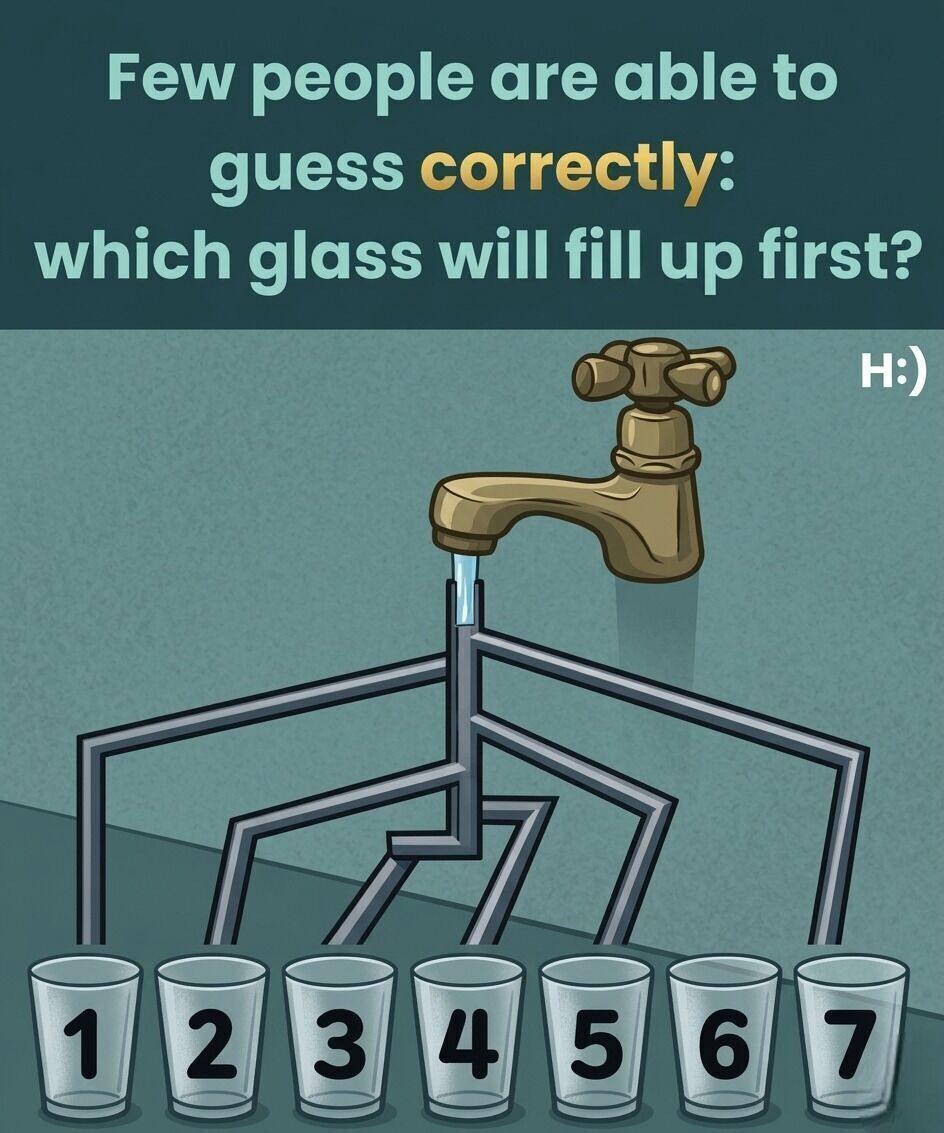
At first glance, the puzzle looks straightforward and almost automatic to solve. A stream of water appears to enter a network of pipes and branch out toward seven numbered glasses. The presence of flow suggests movement, and the structure suggests that at least one glass will eventually be filled.
This immediate assumption comes from how the human brain interprets visual systems. When we see pipes and water, we instinctively expect continuity. The mind prefers patterns that “make sense” quickly, especially when a result seems implied.
Because of that, many people start by tracing the flow mentally. They follow paths from the source, imagining how water should move through each branch. This creates confidence that an answer will appear quickly.
However, that confidence is based on assumption rather than careful inspection. Visual puzzles like this are designed to exploit that shortcut thinking. They look functional even when they are not fully connected.
Continued on the next page
ADVERTISEMENT

